“History doesn’t repeat itself, but it often rhymes.” – Mark Twain
A decade ago, streaming was the great escape from cable. No more bloated channel packages. No more endless price hikes. No more paying for content you didn’t want. Streaming promised freedom — à la carte viewing, low costs, and no ads.
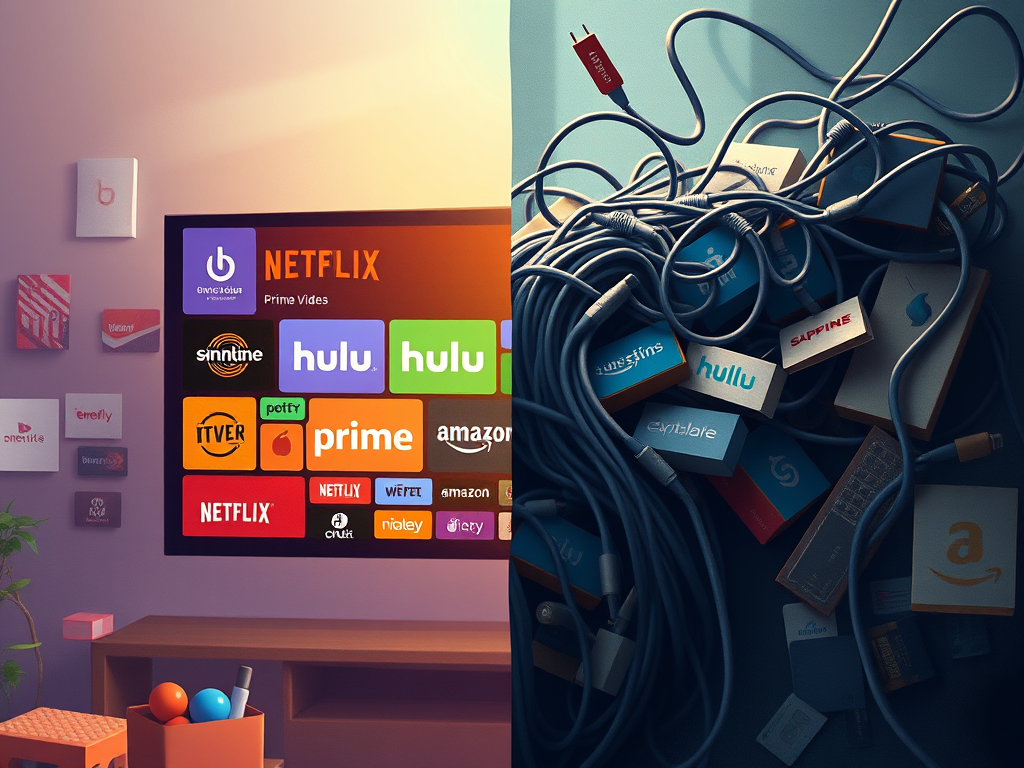
But now? It’s starting to look a lot like the very thing it was supposed to replace. Prices are climbing. Bundling is back. And the giants that once disrupted cable are quietly becoming cable. Streaming didn’t kill the cable model — it’s resurrecting it in a slicker, digital disguise.
We’re not moving forward — we’re running in circles.
How Streaming Gave Us Freedom — and Took It Away
To understand where we’re headed, we have to understand where we came from. The rise of streaming in the early 2010s felt like the dawn of a golden age for consumers. Netflix, Hulu, and Amazon Prime Video were simple and affordable. For less than $10 a month, viewers could access massive libraries of TV shows and movies, all without the need for a cable subscription.
Streaming was simple: one low fee, no ads, and full control over what you watched. Cord-cutting soared. Cable giants were left scrambling. It felt like a consumer revolution — until the industry’s success attracted the wrong kind of attention.
When Netflix began investing in original content — with hits like House of Cards and Orange is the New Black — it seemed like the future belonged to streaming. Cable was losing relevance. The power was shifting to consumers.
It was a heady time. The rise of streaming felt like freedom. But nothing that good ever lasts.
From Simplicity to Chaos
Suddenly, the simplicity was gone.
Stranger Things? Netflix. The Mandalorian? Disney+. Succession? HBO Max. What started as a low-cost alternative had become a chaotic and expensive mess.
By the late 2010s, legacy media companies realized they’d made a mistake licensing content to Netflix. They began pulling their most valuable shows and launching their own competing services:
- Disney+ launched in 2019 and quickly reclaimed its library of Marvel, Star Wars, and Pixar titles.
- HBO Max became the home for Warner Bros. content after pulling it from Netflix.
- NBCUniversal created Peacock, while Paramount launched Paramount+.
Instead of needing one or two streaming services, you now needed half a dozen just to keep up with the content you enjoyed.
By 2023, the average household subscribed to 4.7 streaming services — and the combined cost rivaled a cable bill. What was supposed to be freedom had become a logistical nightmare. More logins. More subscriptions. More charges on your credit card.
Streaming wasn’t an alternative anymore — it was cable, just with more passwords and fewer remote controls.
And now, the industry’s response isn’t to make things simpler — it’s to consolidate power.
The Bundles Are Back — And They’re Worse
Consolidation is the next phase of this cycle — and it’s not about improving your experience. It’s about power and profits.
Disney-Hulu Merger
Disney’s acquisition of Hulu, and its plan to fully integrate Hulu content into Disney+, signals the beginning of this trend. Disney isn’t creating a “super app” for your convenience — it’s about locking you into their ecosystem and squeezing more money out of you.
Warner Bros. and Discovery’s Moves
Similarly, the merger of Warner Bros. and Discovery led to the creation of Max. Combining HBO and Discovery wasn’t about giving you more choices — it was about charging you more for things you never asked for.
The Rise of Streaming Partnerships
This isn’t innovation — it’s collusion. The more these companies work together, the more power they have to dictate what you watch and how much you pay:
- Verizon and Netflix offer discounted bundles.
- Disney+ and Hulu are bundled with ESPN+.
- Amazon is experimenting with allowing you to add additional channel subscriptions (like Starz and Showtime) directly within Prime Video.
What’s happening here? It’s cable. All over again.
Higher Prices, Fewer Choices — and More Ads
Consolidation in the streaming industry creates the same economic pressures and incentives that made cable so unpopular in the first place:
1. Fewer Options, Higher Prices
Less competition means higher prices — it’s that simple.
- Netflix’s basic plan jumped from $8.99 to $15.49.
- Disney+ raised prices by over 20% in one year.
- Max and Hulu have both introduced ad-supported tiers — while raising prices for the ad-free versions.
They’re doing it because they can.
2. Forced Bundling
Want The Mandalorian? Hope you like paying for ESPN+ too. You’re not subscribing to content anymore — you’re buying into ecosystems.
Want Game of Thrones? That’ll cost you — and you’ll have to take House Hunters and 90 Day Fiancé with it, even if you never watch reality TV.
The very thing we hated about cable is back — only now it’s digital.
3. Ad Creep
Remember when you paid for streaming to avoid ads?
- Netflix and Disney+ have introduced ad-supported tiers.
- Even “ad-free” tiers are sneaking in trailers and “suggested content.”
And if you want to avoid ads altogether? Prepare to pay even more.
The Future of Streaming: Fight or Surrender?
The original promise of streaming — à la carte content, low prices, no ads — is eroding. As prices rise and content bundles become unavoidable, consumer behavior will likely shift in one of two directions:
- Piracy will rise: Already, piracy rates are increasing as more content is split across multiple paywalled platforms.
- “Streaming Churn” will increase: Consumers may begin rotating subscriptions, canceling one platform for a few months and then switching to another based on available content.
Alternatively, we may see a scenario where a few dominant platforms (Netflix, Disney+, Amazon) become the new cable companies — controlling access to most major content, raising prices steadily, and reintroducing advertising models that mirror traditional TV.
Conclusion: The Circle is Complete
We’ve come full circle. Streaming started as a rebellion — but now it’s turning into a monopoly. Just as cable companies once dictated how and what we watched, streaming giants are consolidating power and recreating the same ecosystem — only with different gatekeepers.
The golden age of streaming wasn’t sustainable — and now we’re paying the price. The question is: Will you fight back, or will you settle for the same exploitation with a different name?
After all, history doesn’t repeat itself — but it sure does rhyme.
 The Bernardoni Brief
Leave a comment