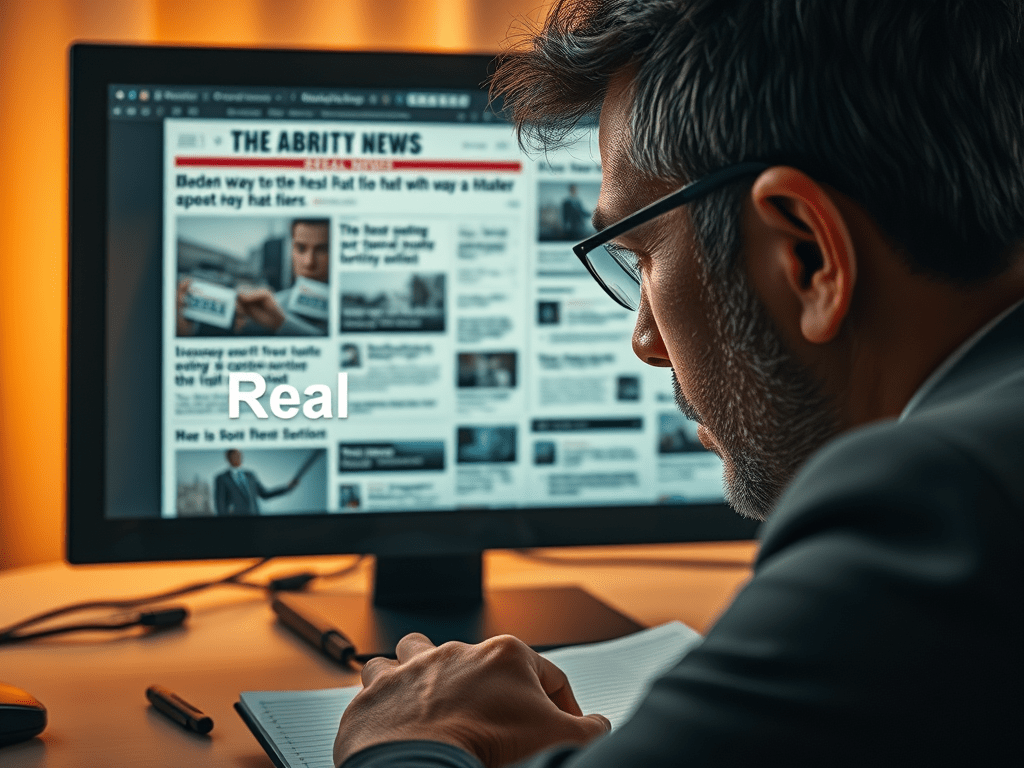
Ever feel like you need a PhD in “misinformation studies” just to scroll through your news feed? You’re not alone. According to Reuters’ 2024 report, nearly three-quarters of Americans are concerned about misinformation—so if you’re frustrated, you’re in good company.
It doesn’t matter where you land on the political spectrum—left, right, or in the middle—being able to tell what’s real and what’s not has never been more important. Let’s be honest: the media and journalists have let us down plenty of times in recent years, running with stories that turned out false or pushing obvious agendas instead of sticking to the facts. No side has a monopoly on mistakes or bias, so it’s up to all of us to use a little extra scrutiny before we buy what we’re being sold.
Misinformation isn’t just aimed at one party or point of view. Every side—left, right, and center—gets targeted with misleading stories. No one’s got a monopoly on being tricked.
The good news? Spotting fake news doesn’t require fancy degrees or insider knowledge. It’s about asking a few straightforward questions that cut through the noise—no buzzwords required.
Fake news and misinformation affect all of us, no matter where you stand politically. It’s not about who’s “right” or “wrong.” It’s about how we all make sense of what’s happening around us.
Let’s break down how to tell what’s real from what’s not—using plain language and practical steps anyone can follow.
🔎 The Source Check: Where’s This Coming From?
First things first: who published this story? This one question can eliminate half the junk in your feed—no matter your political leanings.
Look at the URL:
Fake news sites often mimic real ones:
- Real:
nytimes.com - Fake:
nytimes-news.comornytime.co
Weird domain extensions like .infonet or shady add-ons like breaking-times24.com? That’s a red flag. When in doubt, Google the outlet’s name to see if it’s recognized.
Check the “About Us” Page:
Legitimate news sites have:
- Clear ownership and contact info
- Physical addresses
- Transparent mission statements
If it’s missing or sounds like it was written by an alien—be wary.
Quick Credibility Test:
Ask yourself:
- Has this source been around a while?
- Do they publish corrections when they’re wrong?
- Do they clearly label opinion vs. news?
These simple checks can keep you from sharing something you’ll regret.
🔎 The Author Check: Who Wrote This?
Anonymous articles aren’t automatically fake, but transparency matters.
Is the Author Real?
A quick search should show:
- Previous work
- Professional profiles (LinkedIn, Twitter/X, bios)
- Subject expertise
If nothing comes up, be skeptical.
What’s Their Angle?
Everyone has biases—no shame in that. The key is being upfront.
- Do they have a balanced track record?
- Are they known for expertise in this topic?
- Do they work for an organization with a clear agenda?
It’s not about avoiding opinions—just knowing the angle.
🔎 The Cross-Check: Is Anyone Else Reporting This?
One of the simplest ways to spot fake news: Is anyone else credible talking about it?
The Major Outlet Test:
If it’s big news, outlets on the left, right, and center will cover it. Check:
- Major national outlets
- Local news for local stories
- International sources for global events
If only one sketchy site is shouting about it, be skeptical.
The Source Link Check:
Click those links—do they:
- Actually support the article?
- Come from credible outlets?
- Exist at all?
Fake stories often rely on links that go nowhere.
🔎 The Emotion Check: Is This Triggering Strong Feelings?
Misinformation doesn’t care who you vote for—it targets your emotions.
Both conservative and liberal audiences see outrage bait designed to get clicks. It’s frustrating for everyone.
The Anger Test:
If a story instantly makes you furious, pause:
- Is it meant to enrage me?
- Does the headline use extreme language?
- Am I being pushed to share immediately?
Real news informs. Fake news inflames.
The “Too Good/Bad to Be True” Test:
If it perfectly confirms your hopes—or your worst fears—double-check. The world is rarely that convenient.
🔎 Beyond the Headline: What’s the Full Story?
Headlines get clicks. The real story might be deeper—or totally different.
The Headline vs. Content Check:
Read the whole article. Watch for:
- Dramatic headlines not backed up by the text
- Quotes out of context
- “Experts say” without naming names
Most people share articles based only on headlines. Don’t be that person.
The Context Check:
Ask:
- What happened before or after?
- Are important details missing?
- Does this really tell the whole story?
Context matters. A 30-second clip rarely shows the full picture.
🔎 The Date Check: When Was This Published?
Old news can be recycled to mislead.
The Freshness Test:
Check the date—especially if:
- There’s no date at all
- Social media makes it sound new
- It says “breaking” but it’s months old
Sometimes old stories come back for good reasons—just make sure it’s labeled.
🔎 The Satire Check: Is This Meant to Be Taken Seriously?
Not all false content is malicious—some is meant to be funny.
The Satire Recognition Test:
Sites like The Onion and The Babylon Bee write jokes that sometimes get mistaken for real news. Look for:
- “About” pages admitting it’s satire
- Stories that are obviously exaggerated
- Other goofy articles on the site
When in doubt, search the site’s name plus “satire.”
🔎 The Bias Check: Are My Own Views Clouding My Judgment?
We’re all more likely to believe news that fits our worldview—left, right, or center. It’s normal—it’s how our brains work. But the trick is catching yourself.
The Personal Bias Test:
Before sharing:
- Would I believe this if it contradicted what I already think?
- Am I dismissing it because I want it to be false?
- Am I too quick to accept it because I want it to be true?
This might be the hardest check, but it’s the most important.
🔎 The Expert Check: What Do the Fact-Checkers Say?
When in doubt, check with the pros. Misinformation targets everyone.
Trusted Fact-Checking Resources:
- FactCheck.org
- PolitiFact
- Snopes
- Reuters Fact Check
- AP Fact Check
Or… ask a librarian! They’re trained to track down reliable info.
🟢 Simple Habits for Staying Informed (Without Losing Your Mind)
- Read multiple sources, including ones with different perspectives
- Pause before sharing breaking news
- Follow trusted journalists, not just big brands
- Be wary of stories designed to provoke
- Use fact-checkers for anything suspicious
🌟 The Bottom Line
Frustrated by how your beliefs get portrayed? You’re not alone—everyone feels misrepresented by the media at some point. That’s exactly why these simple checks matter for all of us.
You don’t need fancy jargon to spot fake news. Just curiosity—and the guts to ask a few basic questions:
- Who’s telling me this?
- How do they know?
- What evidence backs it up?
- Who else is talking about it?
- What might be missing?
These questions work no matter your politics—because misinformation targets everyone.
Want to learn more? Check out our other articles on media literacy and marketing!
 The Bernardoni Brief
Leave a comment