By Bill Bernardoni
Former Marlins president David Samson says radio baseball survives only on nostalgia. Nielsen's numbers say something else, and so does the record of the front office he ran.
When I was a kid, baseball was a sound. Cubs games on WGN radio meant Pat Hughes calling the pitch, Ron Santo groaning through every bad inning, and every once in a while Santo's "Yes!" telling you everything you needed to know before Pat finished the sentence. These days it's Hughes and Ron Coomer on 104.3 The Score, and I still turn it on in the car.
Cardinals games meant something else: outside with my grandparents, working in the garden, the radio going while we weeded and watered. That was the soundtrack of those afternoons.
So I'll admit I didn't take it well when I heard what David Samson said on his podcast this week.
"We don't need baseball on radio anymore," Samson said on Nothing Personal Wednesday. "The only reason we have baseball on radio is so people can feel better about what baseball means to them."
He went further. "You require to have baseball and radio because everybody hasn't died yet who grew up listening to baseball on the radio with a little radio under their bed or with a thing in their ear. But guess what? That generation is going to die at some point." His conclusion: "radio will go the way of Kodak and Blockbuster."
Here's my take. Samson is right about some of the money. He's wrong about the audience. And the audience is the part that matters.
What He Gets Right
On the money, he's not inventing a crisis.
"There's no money in radio," Samson said. "If you're on AM radio right now, well, let's just say that you ought to be simulcasting and you ought to be on YouTube, you ought to be a podcast because money in AM radio has pretty much disappeared."
Rights fees aren't what they were. A lot of teams now buy time on their flagship, sell their own ads, and produce their own broadcasts, just like he described. "It's not very profitable," he said. "It's like a nightmare." I've run stations. During COVID, stations everywhere had to cut back — sales, production, newsrooms — and a lot of them never put that staff back. The newsroom that used to cover a high school playoff and a city council meeting the same afternoon is often one person and a laptop now. I'm not going to pretend the radio business is easy.
And he's right that the voices should be everywhere: on the stream, in the app, in the car, on YouTube. Good stations already are.
To his credit, Samson also said the great radio voices "were the music of our lives." We agree on that much.
But "radio rights don't pay like they used to" is a business problem. "Nobody needs baseball on radio" is a claim about listeners. Those are different things, and the second one doesn't hold up.
What the Numbers Say
In July 2024, Nielsen looked at the 29 U.S. big-league teams in metered markets. Their radio broadcasts averaged an 8.9 share of everyone listening to radio in their markets, age 6 and up, Inside Radio reported. Fifty-nine percent of those stations were over a 5 share. More than 40% of teams had double-digit shares. Nearly half averaged 50,000 listeners or more per game. Nielsen Senior VP John Snyder called the numbers "incredibly strong."
In Cleveland, more than one in four radio listeners during a Guardians game was listening to the Guardians, a 27.5 share. Milwaukee posted a 19.2. Cincinnati, 18.8. Philadelphia, 18.5, with about 141,000 people tuned in per game. Pittsburgh, 18. St. Louis, 15.1.
For people who don't live in ratings books: a double-digit share in a big market is a winner. Most stations never see one.
It doesn't stop at the last out. Nielsen found 2024 MLB postgame shows averaged a 9 share, with Cleveland at 23.7 and Philadelphia at 20.1. People stay to hear the manager and the callers. That's not nostalgia. That's an audience.
And it isn't just old men in recliners. Nielsen's own Snyder noted on LinkedIn that more than 73% of Braves listening in 2024 happened at home — hometown voices, radio synced to the TV, subscription fatigue, regional blackouts. That's Samson's "audio of the video" future, except people are choosing the radio call.
Where People Actually Listen
Samson's real argument is that the device is going away. The car says otherwise.
Nielsen's new "Everyone. Everywhere." report, published this month, says radio reaches 92% of U.S. adults every month, and 87% of adults 18 to 34, the group supposedly raised entirely on devices. Sixty-five percent of adult radio listening happens away from home, mostly in the car. In the car, more than 80% of ad-supported audio time goes to AM/FM.
In a May 2026 Nielsen study with iHeartMedia, about half of car buyers said they'd refuse to buy a vehicle without AM/FM, and two-thirds said zero latency matters for live sports, where a stream can run behind the action. Anybody who's had a buddy text "WHAT A CATCH" while the play hasn't happened yet on their app knows exactly what that means. (Nielsen and iHeart have a stake in radio — read it with that in mind. The numbers are still the numbers.)
Snyder also noted more teams are starting games earlier, closer to drive time — scheduling around radio listening, not away from it.
Chicago Doesn't Need a Lecture
I don't have to go far for proof.
When the Cubs won Game 7 in 2016, more than a million people listened to the radio call on WSCR, Inside Radio reported, and in the final hour the station had a 50 share. Half of everyone listening to radio in Chicago. Pat Hughes and Ron Coomer called it. Plenty of people had the TV on with the sound down so they could hear it from Pat.
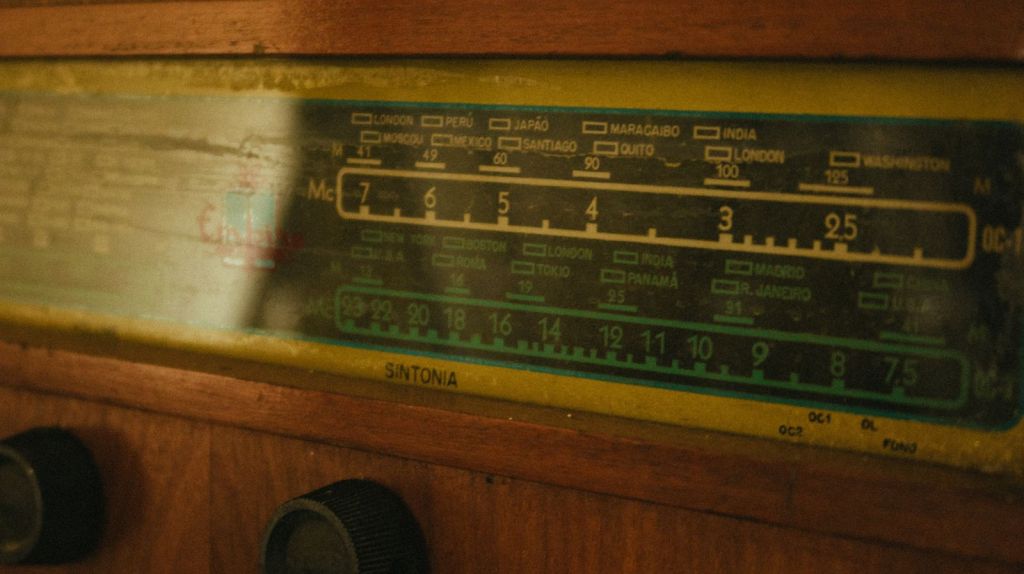
I was one of them, in a way. After the rain delay, I walked away from the TV, went into my parents' den, and turned on the 1960s-style AM radio setup they'd had forever. I sat there and listened to Pat Hughes. I thought about my grandfather. I thought about everyone who wasn't there to see it. That call was how I wanted the night to sound.
Ten years later, Hughes and Coomer are still on the Cubs Radio Network — I catch them on 104.3 The Score — reaching towns like mine where the stream buffers and the signal doesn't.
Why I Miss the Booth
This part is personal.
I've called baseball, basketball, and football at the high school and college level, and I did play-by-play in the Pecos League for the Garden City Wind for a few years. I've also been a morning host, an operations director, and a program director. Nothing was more fun than the booth. You're painting a picture for somebody who can't see it — the count, the shift, the wind, the guy loosening up in the bullpen. You're the eyes for a farmer in a combine, a mom driving home from work, a kid with a radio he isn't supposed to have on past bedtime.
TV tells you what happened. Radio makes you part of it. I miss that more than I expected to.
The last conversation I had with my grandma before she passed this summer was about the Cardinals. She talked about how much she loved listening to them on the radio, and how annoyed she was that she couldn't find them on TV. That wasn't a woman clinging to a gadget under the bed. That was a fan who knew exactly where the game still lived.
That's not "feeling better about what baseball means." That's the product. And listeners are still buying it.
Consider the Source
Which brings me to the messenger.
Samson ran the business side for Jeffrey Loria, his former stepfather, first in Montreal and then in Miami from 2002 through the 2017 sale. They won the 2003 World Series. That's real, and I'll give it to them.
Then look at the rest. On his own show, Samson recalled telling Montreal's CJAD to "pay up or we're not giving you our games on radio." He admitted he was "young" and "cocky." The result, as he put it: "Did we have no English radio deal? We didn't." The Expos opened the 2000 season with no English-language radio and no TV. Longtime voice Dave Van Horne told The Globe and Mail that radio was "the club's lifeline to the fans and the fans' lifeline to the club." Loria and Samson left for Miami in 2002. The Expos left Montreal after 2004.
In Miami, the Marlins claimed they were too poor to pay for a stadium and refused to open their books. Leaked financials later showed tens of millions in profit, SABR's ownership history notes. Taxpayers covered most of the ballpark; the county will end up paying about $2.4 billion on its bonds. The SEC investigated the financing and closed the probe in 2016 with no enforcement action. Voters recalled the county mayor who championed the deal.
One season into the new park, the Marlins dumped their stars in a fire sale. They never had a winning season there under Loria. Samson admitted to The New Yorker that the team had lied about season-ticket sales. Loria sold for $1.2 billion. A year later, Samson walked onstage at a party in Miami, got booed, raised his middle finger, and said, "One-point-two billion. F— you." He later said it was a bit. He didn't apologize.
I'm not saying a man can't be wrong about his own team and right about radio. But when someone whose front office spent two decades treating fans like a cost center says the fans' favorite way to follow the game is just a sentimental habit, I'd check the numbers before I'd take his word for it.
The Bottom Line
Baseball radio has a money problem in some markets. Fix the deals. Stream everything. Put the voices on YouTube. I'm for all of it.
But the audience isn't dying off. It's in the car, in the yard, on the porch, and in the living room with the TV on mute. It's an 8.9 share on an average night and a 50 share when history happens. It's a grandma who still knew where to find the Cardinals.
Kodak and Blockbuster died because people stopped using them. People haven't stopped using this. Nielsen counts them every night.
Bill Bernardoni is the founder of Bernardoni Media & Marketing in Ottawa, Illinois, and co-host of America at 250: Due Diligence with former Voice of America White House bureau chief Steve Herman. He has worked in radio as a morning host, play-by-play announcer, operations director, and program director.
Building a radio audience that stays through the last out? Let's talk it through.
Book a 20-minute call · Radio station consulting
Sources
- Nothing Personal with David Samson, Ep. 1510 Hour 2, "So You Wanna Talk to Samson Wednesday! Lockout fear! Sports radio rights! Nepo hires!" (Oct 28, 2026), radio-rights segment (~40:14).
- Inside Radio, "MLB On The Radio: Numbers 'Incredibly Strong,' Says Nielsen's John Snyder" (Jul 19, 2024)
- Inside Radio, "Nielsen: MLB Postgame Shows A Hit For Ratings" (Feb 6, 2025)
- John Snyder (Nielsen), "Baseball on the Radio, Where?" LinkedIn (2024)
- Nielsen, "Everyone. Everywhere." (Oct 2026)
- Inside Radio, "Cubs Flagship Turns History Into Victory" (Nov 2016)
- MLB.com, Cubs/670 The Score extend Hughes and Coomer
- ESPN/AP, "Still no TV, English-language radio for Expos" (Apr 3, 2000)
- The Globe and Mail, "Expos without TV deal" (2000)
- SABR, "Miami Marlins team ownership history"
- ESPN/AP, "SEC probes Marlins stadium financing" (Dec 5, 2011)
- Palm Beach Post, "Marlins President David Samson says team lied about season ticket sales" (Apr 28, 2012)
- Miami New Times, Samson at Le Batard party (Dec 2018)
- New York Post (Dec 19, 2018), same incident


Leave a Reply